Tag: Snnprofit

Whose time has come? Netsquared for the UK

I’m about to indulge in substantial conflation. Bear with me.

Yesterday on the train from Birmingham to London to take up William Hoyle’s characteristically sociable invitation to explore Dan McQuillan’s proposition for establishing Netsquared in the Old World, I was reading the latest edition of Prospect.

In it American writer Walter Russell Mead confronts us with a curious idea: “suppose Britain is back.. really moving once again to become a global leader in finance, culture and technology”.

Partly through immigration, partly through economic and social change, Britain is becoming tumultuous once again. The City is too big, too successful and above all too revolutionary and even piratical to tolerate the fussy mediocrity that characterised British economic governance for so long. There are large numbers of immigrants who are not sure whether they really want to be British—and there are people in Britain once again who think that religion is important enough to die for or even to kill for. The Scots aren’t sure they want to stay in; the English aren’t entirely sure that they want them. Various loony-toon advocacy groups are running around taking all kinds of interesting causes to foolish extremes. Vulgar billionaires and shady foreign plutocrats with mysterious pasts swank through the streets of London. And none of these people actually care very much what the great and the good think of them. In other words, Britain today is looking more like it used to back when it was actually great. It is looking a little more like the kind of Britain that a Defoe or a Dickens would recognise: snarky, eccentric, iconoclastic. It is looking less like a slightly moth-eaten tourist attraction and a little more like the titanic force for change that not so long ago exported one revolution after another to the world.

Aside from the ironic instinct to hum Jeruslaem as you read that passage it sort of sums up in my mind part of the discussion that was emerging in the Newman Ams last night (reported by David Wilcox). I don’t mean about Britain. I mean about how disruptive technology, people and ideas are driving change faster than the older politer people, structures and ideas can resist change.
Netsquared (whether UK, European or the original US version) should exist to shake up cosy assumptions (“fussy mediocrity”) about social change and who has the power/authority to lead or drive it. Dan McQuillan made the proposition earlier this year:

The proposal is to establish project like Netsquared that hits the sweet spot at the overlap of technology & social innovation. The goals would be

  • To stimulate web-enabled social innovation
  • To create a an online-offline community for learning skills, sharing experiences and developing expertise
  • To sustain socially progressive activity through alternative business & organisational models

and added:

The conference and community could also address ‘the organizational question’ i.e. the challenge that Web 2.0 raises for traditional NGOs and non-profits. The many dimensions of this challenge have been spelled out recently by Michael Gilbert in The Permeable Organization , Steve Bridger in Whose cause is it anyway? and Katrin Verclas in Online Communities Redux: Why They Matter to You. Perhaps, like the second Netsquared conference, it could aim to incubate a new generation of web-enabled non-profits that use new forms of organising to deliver more directly on their missions.

Netsquared UK can offer room for those who are not complacent about their place in the social economy, for those who think “less like a slightly moth-eaten tourist attraction and a little more like the titanic force for change that not so long ago exported one revolution after another to the world.”

Sadly I left early so missed some of the best stuff. Just a thought though on names. My instinct is to stick with NetsquaredUK simply because some of the larger global tech firms will already recognise the concept.

Also there was: Steve Bridger, Michael Ambjorn, Paul Miller, Simon Berry, Nathalie McDermott and others. Please send me your blog adresses and I’ll add them.  Also see Andrew Brown for other reflections on the Mead Essay
Demos on Play and the Public Realm

Nice job from Demos on a number of counts. This is good use of online social media – (this film appears on Youtube and their blog so you can watch it, comment on it and share it – hence social media) and a neat summary of the problem of children no longer feeling safe or welcome to play in public spaces. The film is well made by Adam, their audio visual intern. Does your organisation have such a thing? If not – should it?

technorati tags:
del.icio.us tags:

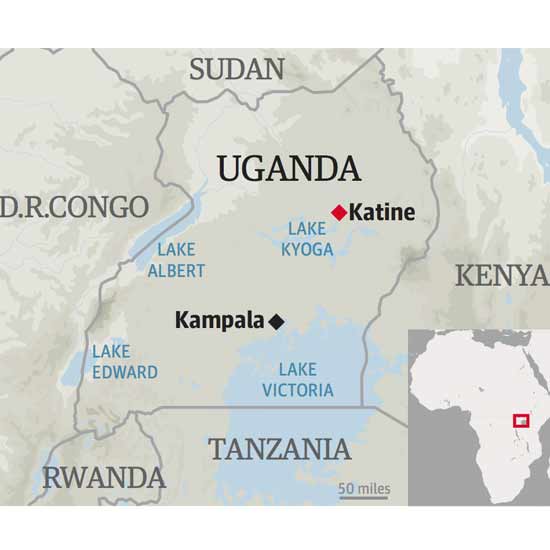
Katine: Is this "the" nptech experiment?

The Guardian’s newly declared 3 year commitment to the village of Katine in Northern Uganda is an ambitious project using the principles of nptech. Guardian editor Alan Rusbridger sets out the three ways he think their long term online work for the community should work:

Get the STORY out there. To quote Rusbridger the newspaper (with less paper and more digits I hope) can “report, record, explain, contextualise, illuminate and analyse… explore the complexities of trying to help communities such as Katine in a sustainable way. It should be able to get beyond the sloganising and occasional yah-boo politics of the development debate.”

FUNDRAISE. Like any busy website the Guardian “can involve a huge community of readers and web-users around the world and find ways of linking them in to what we’re doing. We’ll need money obviously.”

and CROWDSOURCE “just as importantly we need advice and involvement. Among our readers are water engineers, doctors, solar energy experts, businessmen and women, teachers, nurses, farmers. We absolutely don’t need a stampede of volunteers, but we would like a technical know-how bank of people who are prepared to offer time and advice. We’ll let you know how to get involved as we go.

Alan Rusbridger adds a fourth, visibility. “Katine and its problems barely register in the capital, Kampala. Some local officials worry that, because it is an area where the political opposition to Mr Museveni’s NRM party is strong, Katine’s problems may not have been among the government’s highest priorities.” What interests me about this is that the potential of the net to apply funds and expertise means that this community could remain ignored in Kampala whilst highly visible elsewhere.

This got me thinking about applying these principals in our own towns and cities. Our own podcast, the Grassroots Channel, has focussed on active citizens and the work they do in neighbourhoods in Birmingham.

But we have not focussed on one neighbourhood and the things we can learn/change from deeply understanding one place. Neither has any local news organisation I’ve ever worked for or know of. Of course some of the poorest parts of our city have had reams written about them; hours filmed and recorded there. But never with the main purpose of the applying the knowledge and resources of the readership for the benefit of that community. Curiously enough though this is exactly what good active citizens do: they get under the story of their neighbourhood – using the stories to decide what to do next and how to convince people to join them.

Elsewhere on the web: The Register is much more cautious than I, sceptical it will accomplish no more than fundraise. Paul Bradshaw is (rightly) excited by such a tangible application of journalistic crowdsourcing, whilst adding a list of how it can be improved – including better use of rss, embeddable video, a clearer way of involving the expertise thrown p (could a wiki with digg buttons help evolve and elevate innovations and the people behind them). The paper also needs to be generous with linking to and talking about these supporters, which works.

This Mad Kenyan Woman finds the whole premise offensive: “I was somewhat displeased, to say the least, to find that the Guardian thinks this Ugandan village exists in a time-warp. Indeed, Guardian readers are invited to lift these poor suffering villagers out of the Middle Ages into the twenty-first century by their generous donations. I could not make this up if I tried…”

One Life Changed by Trust in Beth Kanter.

Leng is going to University after Beth Kanter raised the $1000 dollars it will cost in less than 24 hours. This worked simply because Beth knows how to use online tools like ChipIn, asks us to contribute to an individual and most importantly is known and trusted by hundreds of people.

If Beth tells me that a cause is worth $10 of my effort I don’t need to know much more (she’s also looking for help for Chanphearom). On top of that Beth offered a simple prize – a mention in her blog, which counnts for something in the blogosphere. It’s Beth making good use of her two most precious resources, trust and influence.

Here’s the list of those who responded within 24 hours – and good luck Leng:

Shirley Williams
Michael David Pick
Preetam Rai
Wiebke Herding
Peter Cranstone
Polly Thompson
Nick Booth
Fernanda Ibarra
Britt Bravo
Kelley-sue LeBlanc
Laura Whitehead
Allyson Lazar
CindyAE
Andrew Carothers
John Powers
Neesha Rahim
Anal Bhattacharya
Steve Bridger
Lloyd Davis
Donna Callejon
Chris Brogan
Anonymous
Joyce Bettencourt
Erin Vest
Philip C Campbell
Jane E Quigley
Steve Spalding
Amanda Mooney
Ann Miller
Donna Papacosta
Christopher Lester
Zena Weist
Connie Reece
Mary Reagan
michael dunn
Anne Boccio
S Michelle Wolverton
Israel Rosencrantz
Clint Smith
Stephen Keaveny
Scott Schablow
Justin Kownacki
Neha Yellurkar
Amie Gillingham
David Beaudouin
Edwin S Coyle III
Randy Stewart
Michelle Martin
Liz Perry
Haystack in A Needle
Ian Wilker
Jay Dedman
Amy Jussel
Roger Carr

Jesse Wiley