This afternoon I spoke at the National Housing and Disrepair Forum annual conference. 100 or so council officers, solicitors, barristers, housing association types and others worrying about just how much money is spent on compensating council tenants for repairs that haven’t been done. This is a link to the presentation: Talk is cheap – so use it more.
I was invited by Kate Priest, the head of the legal department at Birmingham City Council that deals with such matters. Kate had heard me talking about local government, social media and the changing democratic relationship in one of my sessions at the Institute of Local Government.
A £3,000 pound compensation bill for a tenant could mean a £15,000 bill from their lawyers – and all that comes out of the repairs budget. So it’s worth exploring other ways to stop this.
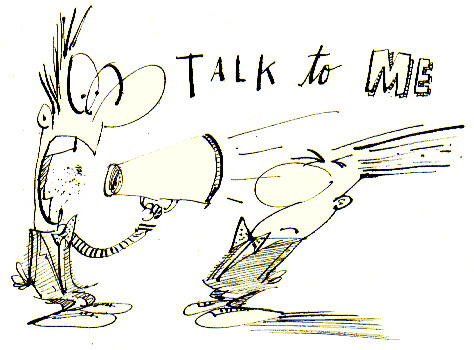
I wanted to get across the idea that this can be thought of as a problem of trust. Lawyers thrive where trust does not. The challenge I wanted to throw to the group was how can they understand this as more than a problem of record keeping, accountability and process? Instead can they involve their people in sincere networks of trust within neighbourhoods.
The presentation is simply designed to offer examples of how and where the social web builds real networks of trust – ones which can make things happen. It was intended to give them a sense that trust is worth hard cash. The tenant who trusts their council worker and so negotiates directly with them could free up thousands for work of public value. The tenants who are part of a wider network of trust may even be able to help negotiate priorities.
Thank you for a big chunk of input on twitter (image here and here of the 19 comments). Here is what you suggested:
“By presenting an authentic face to tenants which listens and responds to their concerns and issues and by helping to link tenants up to find others in their situation, or who have resolved issues to share experience and connect” Dave Briggs.
“Listen to people where they are already talking about you (good and bad stuff)” Paul Henderson.
“Any way of improving two-way communication must surely help” Catnip.
“Councils need to improve / review their relationships offline before making a difference online” Stuart Parker.
“One easy win would be for blogs to be set up for individual estates – the council can keep tenants fully in the loop of developments, the tenants would be able to have their say, but also that blog could help develop & bind the community of the estate itself together. wins all round, for minimal financial investment, really.” Simon Gray.
“Not a council tenant, but as a private one an answerphone and email address would be a start!” and “I think the question’s wrong: maybe, ‘what are the problems facing council tenants’ and keep soc media in mind when addressing them ” Michael Grimes.
“This is helping in some respects, esp with young people on 1st tenancy http://www.inliving.co.uk ” John Popham.
“If social media is ‘informal’ it will help get over the “stigma” of phoning somone or appearing in person.” Paul Jennings.
“Human face and interaction with two-way content. Would also bring tenants into contact with each other as well as council.” Nicky Getgood.
“I think councils are way off social media. Difficult to control comms leads to degraded service. Also privacy issues and challenge of delivering service using tools and channels that are external. Eg what if Twitter down? Ian Edwards.
“Google alerts for blog posts about “dog sh*t” or “broken paving slab” + their ward, then follow it up. That’s only a semi joke”. Jon Hickman.
“Blogging for different estates. Would get people to know each other and get them talking about issues that matter to them.” Antonio Roberts.
“Works t’other way- CLG wants tenants 2 have a role in mgmt- better way 2 engage than endless meetings (although meetings r useful)”. Nick Drew.
Toronto based Michael Cayley also asked: “ pls share some references used for trust & social capital session aimed at lawyers who defend councils from housing repair claims.
I used very simple examples. I was facing an audience of 100 people, none of whom blog, only one had heard of twitter. Even though I was amongst many lawyers only a smattering had come across Linkedin. I needed to show how building networks of trust can help make good things happen. I used the example of the Birmingham Bloggers group and the Social Media Surgeries. I used the volunteer effort that mysociety can apply to ventures like fixmystreet (and not a soul in the room had heard of the site). I also talked to them about the open innovation exchange experiment and how it’s model of open collaboration to pitch for contracts is using trust to disrupt existing ways of doing business and improve the outcome for the public.
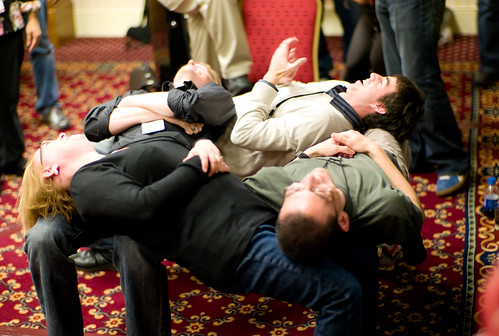
Responses were mixed. Some went for the very human (my favourites) such as getting good at saying sorry, takings flowers when you’ve messed up and having street meeting with contractors. Others talked specifically about procedures and software to track transactions. One reported how law firms use facebook to recruit people for court cases.
Overall I tried to emphasise that I wanted people to go away not so much thinking about the internet, but appreciating that whatever they can do to build trust should ultimately reduce their need to fight fruitless court battles with the very people they exist to help.
We’ll see what comes next.