Category: Neighbourhoods

OpenStreetMap and a festival of #hyperlocal and global mapping in Birmingham

I’ve just received this from Brian Pringle about this weekend’s – open streeet map event.  Birmingham will be hosting this global festival of the collaborative openly licensed map of the world.    It was back in Feb 2009 that we blogged about how Birmingham was the first city  in England  to be fully street mapped by the volunteers of Mappa Mercia.  Here’s the news release about this weekend:

——

“Hundreds of digital mappers from around the world will descend on Birmingham on Friday 6th September as OpenStreetMap brings its annual international State of the Map conference to Aston University for three days. Cartographers, mappers, software developers, outdoor sports enthusiasts, civic activists, governments and businesses with an interest in location-based data will be there.

So if you see lots of people in Birmingham over the weekend avidly photographing and taking notes, its just OpenStreetMap mappers using their spare time to improve the map of Birmingham.

OpenStreetMap is transforming the way maps are made and used. Collecting, editing and publishing geographical data with a global army of over 1.3 million volunteers creates maps with levels of detail unachievable by other means. Its data dynamically and constantly evolves — just as places do

The nine-year-old crowdsourced geodata project is powering mapping apps (Skobbler and, in places, Apple Maps), recommendation tools (Foursquare), sports watches (Leikr), classifieds (Craigslist) and property search engines (Nestoria).

Volunteers collect data that is of specific interest to their communities, which might not otherwise be collected. Mappers who edit the data have usually had personal interactions with a place or locale. They know locations intimately, making their contributions detailed, rich, and hyperlocal. This means more accurate, “fresh” maps for users and an enhanced experience which is critical for successful services. More and more startups and services are focused on providing hyperlocal  functionality and features, so hyperlocal data is a necessity. Only OpenStreetMap’s army of contributors can provide that. Traditional corporate map providers are painfully aware of this.

All of the data collected is published under an open license so anyone may use the data freely and for free. Because OpenStreetMap publishes data and not just a map, anyone can make a map to their own style highlighting whatever data they choose, and there are now hundreds in use across the world.

Local authorities are warming to OpenStreetMap: Warwickshire County Council will be showing delegates how they used OpenStreetMap for realtime publishing of their local election results. Delegates will also be hearing from the National Trust about how they’re using OpenStreetMap data.

Speakers from Ordnance Survey and IBM’s Smarter Cities project will address the conference on the  impact volunteer-collected map data is making.

Aid and development NGOs, including the World Bank, were quick to recognise the advantages of OpenStreetMap’s methods and now regularly request volunteer teams to build maps rapidly in areas of the world where humanitarian crises erupt. The Humanitarian OSM Team will be updating delegates on their latest projects in the poorer countries of the world.

“This is a golden opportunity for West Midlands and indeed UK software developers to meet the people changing the face of digital maps; and to investigate new lines of business in an increasingly mobile and information-hungry world” said Brian Prangle local organiser for State of the Map 2013.

For further information contact:

Henk Hoff henk.hoff@osmfoundation.org Skype: toffehoff  Phone: +31 6 4808 8925

Brian Prangle brian@mappa-mercia.org Phone: 0121 604 1141 Mobile  07811667653

Conference Co-ordination (live from 12 noon Thursday 5th September) 07742 011690

Background Information for Editors:

Conference commences at 0930 am Friday 6th September in the Main Building Aston University. Request press credentials at info@stateofthemap.org before 12 noon Thursday 5th September.

Full Conference Programme is here

http://wiki.openstreetmap.org/wiki/Press_Kit

http://hot.openstreetmap.org/

http://www.stateofthemap.org/

Here’s a video link to a whole year of edits over the entire planet for 2012.

Watch live  updates to the map”

Can I video my local council meetings?


It is often very helpful for local community groups or hyperlocal blogs to be able to record what happens at council meetings. It allows them to capture and share a record of what was agreed – and hold politicians to account in the future.  It can also help them celebrate success and show good local government in practice.

Some local council’s have had problems with this and today the Department for Communities and Local Government have clarified things for us all.

many councils across the country are still refusing to allow people to film public council meetings. In some episodes of TV programme Grand Designs, viewers have been perplexed at cameras being stopped from filming meetings of the planning committee considering the self-build projects.

The new guidance explicitly states that councillors and council officers can be filmed at council meetings, and corrects misconceptions that the Data Protection Act somehow prohibits this.

The Health and Safety Executive has also shot down the suggestion that ‘health and safety ‘regulations’ also bar filming, which Wirral Council used to justify a filming ban last year.

The new rules do not apply to Wales, as they have not been introduced by the Welsh government who have devolved responsibility. This led to the situation of a blogger being arrested and handcuffed by the police for filming a council meeting in Carmarthenshire. Wrexham council also banned a journalist from the Daily Post from tweeting a council meeting. Eric Pickles has today challenged Welsh ministers to introduce the new rights in Wales too.

Here’s the document and any and all active citizens and local bloggers should keep this in their back pocket.

BloggeYour council’s cabinet: going to its meetings, seeing how it works – a guide for local peoplers and V…

Be considerate, don’t disrupt, get those cameras out, share what you shoot.

So the short answer is yes.  hat tip Will Perrin and Talk About Local.


Why don’t we trust networks to do things at scale? #ukgovcamp13 #lsis13

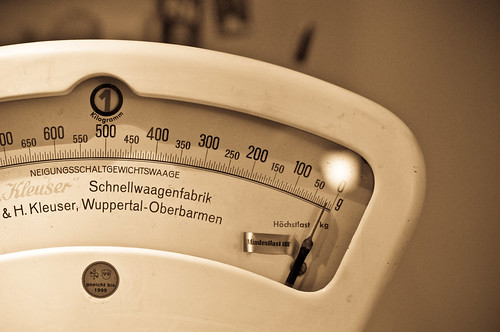
A picture of a traditional set opf scales with german writing
Image thanks to vividbreeze on flickr

I’ve had a bonkers busy few weeks – meeting and talking to a wide range of people and it’s helped me start thinking through a problem with networks:  they tend not to be trusted to reliably deliver solutions at any sort of scale.

Let me share how and why I’ve started looking at this (and I’m sure I’m not the first).

Catherine Howe  (her govcamp piece here) and myself were both in a session at the fabulous ukgovcamp last Saturday.  It was the end of the day and  I think (I came in late)  it was on what makes cross sector collaboration work and  convened by  Jag Goraya with a big dose of help from Saul Cozens.

A problem of scale?


The bit of the discussion that helped me went along the lines of.   “The answer to a lot of public sector problems do sit in developing healthy networks and developing and encouraging the cultures which help networks thrive.  Do that and  people tend to do what makes sense, rather than what is prescribed.”  I was trying to understand why achieving this is so difficult and suggested that it was a problem with scale, something along the lines of…

  1. Large budgets and large problems tend to lead to large things being created and commissioned.
  2. These have a direction of their own and – on the whole – need to be seen to succeed.
  3. Networked activity is different – it is often lots of small activity with little or modest innovation – that doesn’t appear to be capable of delivering at scale.
  4. So large organsiation charged with sorting large problems are loathe to trust to a networked approach.

In truth I think networks can deliver at scale.  A city is such a thing, the families that make up a community likewise. The benefit for using networked approaches for sorting big problems is we don’t need to invest everything in one large solution then persuade ourselves it has worked.

Dollops and cock up


Instead we need to learn how to recognise the pattern of networked progress:  plenty  of success, a good dollop  of treading water and a decent slice of cock-up, indifference, waste and failure.

I think way forward collectivity this will improve on social problems more steadily and in a way that people can more easily get involved with than a large scale service offer tends to do.  It’s also relates to why I’ve had problems with unrealistic expectations – that setting expectation too high leads to harming social movement – zero expectations encourage success – high expectations make even achievements look like failures.

That was the gist of where ukgovcamp  had got me to.  It was built on other things recently:

  • Listening to a conversation the week before at a conference I spoke at for the Hampshire Association of Local Council’s digital conference  (again with Catherine Howe) amongst a group of councillors from some of the larger
  • At the LSIS Governance conference in Manchester late last week I started talking to a Clerk to a Further Ed college that had been asked to improve educational attainment in a particular neighbourhood.  They wanted a steady approach that built community links, strengthened social capital and relationships and built aspiration in the community. The funders wanted rapid change – so what they are likely to buy  is intense extra activity with the students about to take their GCSE’s – one is the big and brittle – v the modest but maybe meaningful.

Capturing the subtle incremental change that comes through networks is partly why we have been working with Gateway Family services and Birmingham Settlement and Nominet Trust to develop an impact assessment app which measures and organises the modest – as well as the sometimes downright remarkable –  shift that happens in people and places.  But turning this into something that politicians and policy makers will trust to deliver is an interesting problem.

Any solutions?


Other govcamp posts:

http://perfectpath.co.uk/2013/03/13/some-things-about-govcamp-ukgc13/

http://sphereless.blogspot.co.uk/2013/03/ukgc13.html

http://ashinyworld.blogspot.co.uk/2013/03/uk-gov-camp-2013.html

http://tonyscott.org.uk/2013/03/14/i-went-to-ukgovcamp-2013/

Rowena Farr

Dave Buckster

David Bicknell

John Glover

Jonathan Flowers

Julia Chandler

Ben Procter

Ann Kempster

Dave God Briggs

Jason Cobb