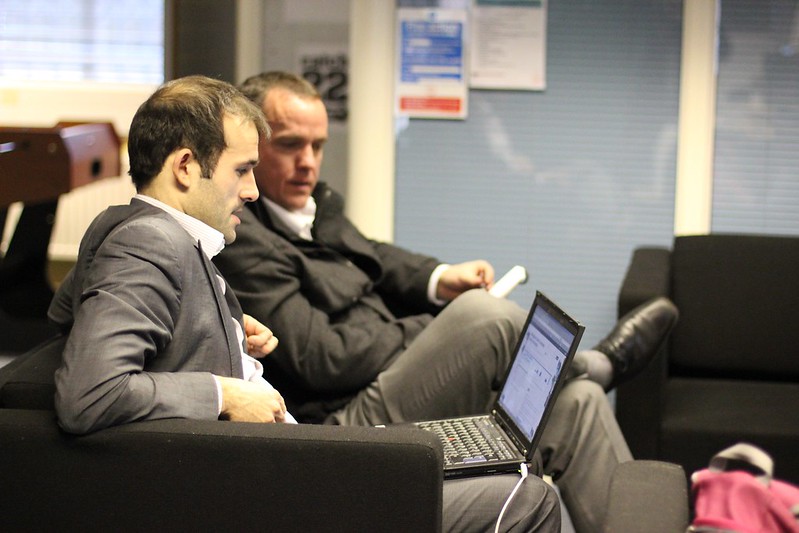
These are notes from Commscamp 2018, held in Birmingham 12th July 2018.
Session: Public Health Campaigns
The general view is that public health messages often fall flat. One public health team not keen on meeting the public, instead they do a leaflet. Often the message comes better from the GP, not the council. At one council they have data which says the messages don’t work on our channels.. so we stop doing it.
It is also often “messaging for morons” – often patronising.
How do we have a different conversation with the public? One always checks messages with real people first.
Health and Wellbeing boards should have their local priorities. One described putting people in a room to discuss a topic, eg neglect.
Session: Stress and Mental Health
Problem for blue light comms in terms of stress and impact.
The problem of always-on digital comms and the impact of being trolled.
For some public services who receive many online complaints or criticism (for example the courts) means that staff deal with large levels of negativity. One charity offered subscriptions to headspace app and other ways to look after your head.
Find the people at work you can trust and talk to.
Keep the work limits clear, when you stop work stop monitoring social media.
Employers have legal obligations for your health and safety – if you’re expected to work 24/7 or something big happens like the Manchester bomb, the employer is obliged to assess risk and make sure you’re alright.
TRIM Trauma risk incident management happens after major incidents in the blue light services, but comms people don’t always have that option. Some roles. like family liaison officers, have to have it but comms teams are only just starting to use it.
“I sobbed all the way the home after a suicide – but hadn’t been troubled by anything else in 3 years”
Session: Co-production and engagement
One way to think about this is councils getting out of the way, help support people create spaces where they can connect.
Community reporters collect information and report it back to services. Community information champions. Training on how to offer information.
Some of the best co-production work happens with vulnerable people and personalising what they receive, thinking about the individual. The way to measure the success is through whether the individual feels they have been listened to.
Get real people in and expose them to the management team, it’s rare
Software building is iterative, not try and fix the services, keep asking, keep changing, keep iterating.
These are just notes from a session at the Locality Convention 2017.
Meena Bharadwa introduced the session and explained that locality has a place to link real community groups into the academic research on this subject and translate between the two. She briefly reminded us that Community Wellbeing is Complex.
The point of the programme is to provide state of the art evidence to help allocate resources.The focus is on people, place and power. research is being shared here: https://www.whatworkswellbeing.org
Andy outlined some of the key ways in which issues around the quality of places and power within places can either lead to better or worse community health.
There is so much evidence that decision makers are becoming overwhelmed.
Key things it shows….
1: In the workplace environment (Marmot’s work on civil service) showing that those with more control have better health. Cardio-vascular heath and life expectancy. In health institutions those who can share in decision making fare better health wise..
2: In the living environment (in our communities) – Is there joint decision makaing (by which they mean “the meaningful involvement of people in decisions that affect their environment…”. Positive outcomes of being involved are..
Depression, self-esteem, sense of mastery
Sense of community, creation of social capital
New skills, learning, better employment, personal empowerment
Also wider impact for those not directly involved in decision making. So they also receive the benefits of improving community resources.
Adverse
Psychological strain from being involbed
Some groups are over consulted leading to stress and frustration (although not convinced about methods used for these studies)
The community Association focuses on getting people into work. They say they found a lack of investment from CCG’s – they called the residents: Buttershaw men and Buttershaw women and thought of them as drinking to much and needing fixing. We studied what people were doing in their communites. Foudnt hat to get thing going
People needed a little help at the beginning
Proper co-design (not the council working up most of it)
Community anchor orgs featured well (hospitals and GP’;s can be intimidating) – so community centres/setting important
Invited GP’s to decamp from their surgeries and come to local orgs.
So we’re building up social capital around health. There’s a lot of talk of pooling budgets – but people not willing to put theirs into the pool.
Voluntary sector assets need to be resourced
The money needs to follow the patient into the third sector (as it would to a physiotherapist)
System says VCS are not evidenced, clinical interventions also not evidenced (often)
The voluntary sector needs to steadily and deliberately re-train the public sector rather than hope for a radical change.
We need to convince that the VCS is value for money.
“We drop 10 million pound balls regularly in the NHS – what could the VCS do with £10 million!”.
However even though I was only there for half the day and I still woke this morning with my brain whirring from the conversations that took place, so much so I’m not sure I have yet processed it all, but as I sit here mulling it all over, sound bites from the speakers keep turning over in my head.
This is mush in my brain and so I’m starting to dump some of it here to try and make sense of what I am thinking.
Mike talked of being bold, and how being bold wasn’t just one large step, but a series of small steps – and that includes moving away from superficial evidence and towards more impactful reporting – that would give a collective voice to report “truth to power”.
Anni about the “unprecedented period of change” we find ourselves, and that we need to embrace technology, but remain human.
David Robinson said the Voluntary Sector has to plan for change and it has to think urgently, inventively and boldly and that they need to work to protect 2 key things:
1. The needs of the Service Users.
2. Embracing Experience – this means protecting the people with knowledge on the face of cuts.
“We are data heavy and insight light”
David also said something that stuck with me and followed me through the rest of the day;
“We are data heavy and insight light” – We measure what the government and funding bodies want us to measure, but we should be reporting on where our value is and what we want to achieve.
This really struck a note as it is something we’ve been encouraging with the user of our Impact Assessment App. It’s not just numbers, it’s also the stories – the insight. Use your relationships with your clients to measure the impact of the work you do, trust the voice of your clients to tell your story – what are you achieving and use those voices and experiences to action change.
Learning from others
The next session was a keynote speech from Tom Loosemore, Director of Digital Service, Co-operative Group – ” Learning from others”
Tom had a lot to say it was really inspiring listening to him, but the take away points for me were:
Slow down, take a step back and have a think it’s a slow revolution. Don’t be passive, Get excited and make things happen – We have it within our power to restart the world again.
We have an obligation to build a better future, using the tools and capabilities of the (digital) revolution.
Don’t just strategise, Do, Build, Work, Observe & Iterate, Listen and Iterate, Observe and iterate again.
What are we learning? Understand the need of your service users. Work with them, don’t write a strategy for them.
Report on what matters.
Use digital to: Get better at what you do & deliver your purpose in different ways.
“Keep your Hippo on a leash, beware the snails and don’t be a boiling frog.”
Tom also used a couple of amusing, but simple descriptions to describe some of the pit falls that the voluntary sector can come up against and what to be aware of. You can sum it up with “Keep your Hippo on a leash, beware the snails and don’t be a boiling frog.”
Hippo – Highest paid person’s opinion – avoid this! You can beat the hippo, if you have a strong voice. Often “paid workers” will try and impose their will on volunteers ad community orgs. This doesn’t have to be the case, speak up, be heard, keep the hippo on a leash.
Snails – are the people that hold you back, that fail to innovate, that are negative and don’t try to see the bigger picture. Beware the snails, know when they are likely to raise their heads.
Boiling Frog – the org/group that is stuck in a boiling pot getting left behind and slowly dying while not even realizing, the group stuck in their ways, failing to move with the times. Move forwards and embrace change. Take the people around you along for the ride. Don’t be the boiling frog.
A view from Whitehall
Following on from Tom was Lord Bob Kerslake – former head of the Civil Service, He gave a talk that touched on the government’s view of the Voluntary sector.
He said elected members often had a default embedded view of the community / voluntary sector, which differs dependent on their party, he said broadly speaking they are:
Tory: Left leaning & Inefficient
Lab: “Why are they doing our job”
However he also said the gov need us more than we need them – we need to stand up and be strong, government respect that, even if they don’t like it. We can use out collective voice to effect change/
Local government relationships are important to CVS, co production and radical change are needed And he recongnised that there needed to be “Show don’t tell” system to demonstrate innovation and impact.
Looking ahead in measurement and evaluation
After the break we went to the first (and my only) break out session – this was all about looking ahead in measurement. They opened the session be saying that this was for cutting edge practices. That digital has changed both the pace and quantity of data being collected the we need think about how we are using this data.
But from there I will be honest, I lost the pace of the session very quickly. All the talk and slides looked more at quantitative data than qualitative outcomes, it was all KPI and number driven, The scale the speakers were talk about was beyond where we are currently working. Global enterprises with millions of pounds of funding that needed to collect vast amounts of data – and there was lots of talk of data.
Data collection and data analysis, data tools and extrapolation – mainly for outputs and I was lost, It appears that even on the “cutting edge” we were still looking at number crunching – all I kept thinking was what about the stories and using people’s voice to evidence outcomes – that’s the impact.
Learning from the morning
Overall the morning got me thinking about how we understand impact measurement and broadly speaking how right I think our approaches are.
You can’t report Impact with numbers alone, you can’t really evidence the real difference you are making in people’s lives with graphs and charts, data means nothing without the background story, You need to make people feel, Or as Chip and Dan Heath would put it – you need to motivate the Elephant:
The over arching themes that I took from the day, and what I feel to be true from our own work are:
Ongoing monitoring
Don’t just wait to the end of a project to demonstrate impact. Real time monitoring and feedback will allow you follow the progress of your work and the journey your clients are on.
Responsive working
By engaging in ongoing measurement and impact reporting it allows you to know if something is working and if it’s not, and allows to to make changes and respond to clients needs
Define and redefine outputs and outcomes
Know your mission and what your are aiming for, but don’t be afraid to redefine it as your work, and your clients experience shape what you do.
Don’t duplicate measurement
Be brave with this one, If a funder asks for something to be measured, find out if they really need it. What measurement are you already doing, get them to fit into your framework, don’t include another set of reporting unnecessarily.
I’m not a service user!
The final thing I didn’t learn yesterday, but I had reconfirmed. I hate the term “service user” over and over this term was used and I really detest it. I’m not a service user, I’m more than just a number, and so is my community, we’re, people, clients, human beings, and if were really going to be talking impact we should be talking real people, not just statistics.
Bit by bit we’ve been doing something strategic in Birmingham. Every social media surgery that happens in the city helps in a number of ways:
Provides new skills to individual active citizens
Creates a place where people can meet each other
Helps community groups and the public sector use the web to talk to each other
Grows the civic conversation online.
This last one has been the strategic part.
I think that growing the civic conversation online is an important part of building new platforms in neighbourhoods. It helps traditional civic activity work better and new civic models emerge.
This is based on a simple assumption that if more civically minded people are using the web to talk to each other in a community it will be easier for politicians, public servants and other citizens to share ideas, information and collaborate or campaign. Of course people can and will use the web to talk about brangelina – but with the surgeries we target those already involved in or wishing to do something consciously civic.
We’ve taken this a step further in the last two or three years. A normal social media surgery is run by volunteers for volunteers – the free help is available to active citizens, local charities and community groups.
We sent out a survey to people who’ve used the social media surgeries in Birmingham. 35 people replied, about 10 per cent of those involved. They were a mixture of volunteers, third sector workers, public servants and at least one councillor.
The Survey
does learning about social media influence how you think about your work
A third of people said what they had learned had influence how they think about their work ‘a lot’ – three quarters replied either 4 or 5 to that question.
One comment from a worker in a charity supporting charities said
“If I hadn’t started using social media to build relationships I doubt I’d still be employed in my organisation, and I doubt my organisation would be doing some of the brilliant work it is doing. It’s enabled both me and my organisation to be pro-active in a rapidly changing and challenging context”
Do you use social media to build relationships in your work?can you make (civic) things happen because you use social media ?
65% of people felt better able to make things happen because they are using social media. This is a core point. Growing the civic conversation is not just about more blither – it’s about more action.
Would it help your work if more community groups and active citizens were using the internet
Developing these skills in community groups and active citizens was also seen as a fresh opportunity by at least 77% of those who replied. They know that the online civic conversation can help them get things done – so helping more people get involved ought to help that more.
have you seen the online conversation grow?
More than 85 % felt they has seen the online civic conversation grow since getting involved with the social media surgery. You would expect that to be the case for most people, simply being exposed to new people and new places where civic things get discussed would have that effect. But it is still encouraging to see that they have a wider civic conversation to take part in.
So Birmingham – you’ve already started a strategic investment in building a critical platform for civic change. Persistence is paying off. Some more? And what next? Which other new platforms are worth building?
If you’re not Birmingham, other places understand this and we can help you. We introduced Dudley CVS to the why and wherefores and they have been runningsurgeries for years – indeed it was Lorna Prescott who told me that what were doing was platform building (sometimes it takes others to spot the obvious).
Manage Cookie Consent
To provide the best experiences, we use technologies like cookies to store and/or access device information. Consenting to these technologies will allow us to process data such as browsing behavior or unique IDs on this site. Not consenting or withdrawing consent, may adversely affect certain features and functions.
Functional
Always active
The technical storage or access is strictly necessary for the legitimate purpose of enabling the use of a specific service explicitly requested by the subscriber or user, or for the sole purpose of carrying out the transmission of a communication over an electronic communications network.
Preferences
The technical storage or access is necessary for the legitimate purpose of storing preferences that are not requested by the subscriber or user.
Statistics
The technical storage or access that is used exclusively for statistical purposes.The technical storage or access that is used exclusively for anonymous statistical purposes. Without a subpoena, voluntary compliance on the part of your Internet Service Provider, or additional records from a third party, information stored or retrieved for this purpose alone cannot usually be used to identify you.
Marketing
The technical storage or access is required to create user profiles to send advertising, or to track the user on a website or across several websites for similar marketing purposes.