Tag: Leadership

Blackhall is the new Whitehall – rapid development of government policy.

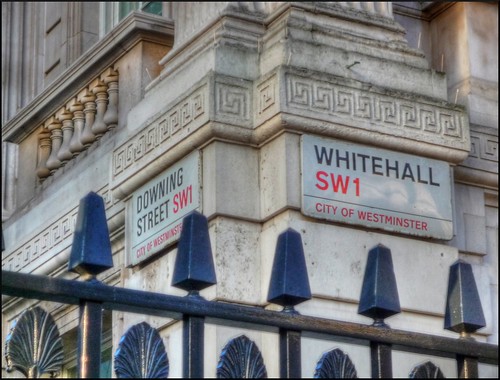
Whitehall by Rick Lewis on Flickr - click to see original

Will Perrin has a knack of helping people understand how the web is changing government. Today he publishes what was until now a private paper on how Whitehall can be transformed.

In Transforming the way we work – from Whitehall to Blackhall he writes about an alternative Whitehall, one that embraces how the web can accelerate change:

The leaders of Blackhall have changed a predominantly ‘need to know’ culture to one underpinned by a ‘need to share’.  They have begun to change the business model from a paper process base to a knowledge based model.   There is far more permeability in Blackhall between government Departments, the wider public sector, the third sector, stakeholders, citizens and business. Policy formation in Blackhall takes weeks or months, rather than months or years, involving more people to create better outcomes with less effort. Officials share knowledge with others across government and with those outside government such as the third sector, font line workers and managers. This is enabled by a pervasive Blackhall electronic working environment. Officials publish information from their screens that can be read by anyone connected to the GSI and selected people outside it, without using email.  The majority of work in Blackhall is published internally so that colleagues can find it using search in the same way they google for information on the internet. A Blackhall working environment would be electronic, pervasive, accessible from wherever you are in the UK and in many cases overseas.  Implicit in this is a standard ability to work on the move with any laptop, blackberry or internet connection.

He continues with what needs to change.

The difference between Whitehall and Blackhall is a managerial determination to make it happen. It might sound difficult to get a multi-hundred year old monopoly to change.  But the civil servants themselves are changing outside the workplace as they use Easyjet, Gmail, Facebook and instant messaging in their private lives.  When they get to work they slip back into an earlier era because the tools aren’t there.

These are his slides from the presentation he gave of these ideas a year ago.

They include compelling illustrations of how little Whitehall has changed communication conventions, regardless of changes in technology. How much is this like the place where you work?  How easy will it be to change from Whitehall to Blackhall.

Hello birminghamnewsroom.com and congratulations

Birmingham News Room header

After a brief consultation process and suggestions  from a number of folk, including this lengthy burble from me, Birmingham City Council has launched birminghamnewsroom.com.

It’s a wordpress based site for their news service to the public and press and  describes itself as

…your first stop for all the news from Europe’s largest local authority.

The aim is to improve our news delivery, so we want the newsroom to be a useful resource for both journalists and members of the general public.

Last rites to the press release?

Deborah Harries, head of news at the council, blogged about where they are at:

The press office at Birmingham City Council has moved into the 21st century and after months of hard work we’ve finally launched our online newsroom. This is an exciting development for my team and hopefully this site will prove to be a useful resource for journalists, bloggers and residents.

We haven’t quite read the last rites to the press release but the world of media relations is changing. (my emphasis)

People consume news in many different ways now and we’re keen to reach a wider audience through the burgeoning and exciting range of social networking tools available. Don’t get me wrong, this is far from the finished article and we’re looking for your views to help further develop the service.

Included is:

A dedicated Youtube Channel, managed partly through vodpod, with straightforward self made content like this:

There is a series of photos in their self hosted gallery (I’d like to be able to link to and use these images) and the twitter account, which popped up a while ago. Plus the all important RSS feed(s?) and it’s good to see comments enabled on individual blog posts/news items.  I imagine trackback is too?

What do I think?

I think it’s wonderful. I’ve got a head full of things that could be done next or perhaps a litle differently, but they can wait.  It’s through using social media that you get good at it and here the council has created a wonderful place for doing just that.

Congratulations to Geoff Coleman, who’s been nursing this for some months, and Deborah Harries for just getting on with it.

(Declaration – from time to time I get paid by Birmingham City Council – not for this though!)

“Councils are no longer dependent on traditional media to communicate their messages”

This has come from Vicky Sargeant at the Socitm press office and I offer it to you verbatim simply because I don’t have time to fully digest it and add links just now, there doesn’t seem to be a apge to link too, but I don’t want to forget to share it with you:

News Release:

County Councils saw their web traffic double last Friday and Saturday thanks to their provision of a sophisticated online election results service coupled with use of social media tolls like Twitter, Facebook, RSS feeds and email alerts.

Figures from the Socitm Website Takeup service, subscribed to by more than half of all county councils show that on Friday 5th and Saturday 6th June, web traffic to county council websites was more than double that of the Friday and Saturday of the previous week.

This trend is bourne out by results from individual councils like Derbyshire, which last Friday saw the highest ever number of visits to its website in one day including more than 19,000 visits to its election section alone.

The sophistication of the election results coverage by councils through their websites has been captured through a survey by Socitm Insight, publishers of the annual Better connected report on council website quality. The survey looked at websites of county councils and new unitaries where elections had been held to see how the results were being reported. It followed a similar exercise carried out at the last county elections in May 2005.

The survey found that almost all councils were reporting results on their websites ‘live’ or as near to real-time as possible and were carrying very prominent links and features on the home page. Many included some form of interactive map, summary tables and charts or other graphics to allow visitors to follow the results as they happened and to access a summary in various forms. Some councils provided TV style graphics including ‘virtual council chambers’ filling up with figures in party colours as the results came in.

A few councils provided a live online comparison with previous election results, showing whether seats were being held, lost or gained. A number of councils stated when the count was due to start, but even better were councils who offered an estimate as to what time the first result was likely to be expected.

Nine councils were also promoting their use of RSS feeds and / or Twitter to publish the results, using these opportunities for to enhance their interaction with the public through these new channels. During the results period, fans on Derbyshire’s Facebook page rose from 22 to 73 and their Twitter account followers rose from 122 to 335. Derbyshire’s Facebook ‘fans’ were contributing comments, and responding to one another as the day unfolded. One said ‘Local newspaper site reporting recounts in Long Eaton while Twitter and @derbyshirecc knows its over. SO behind. V. poor compared to you guys. Many thanks for all the hard work pulling this together today’.

Other innovations noted on election pages included:

  • Norfolk County Council – featured its YouTube video on why you should vote
  • Lancashire County Council – offered the facility to subscribe to receive results by e-mail
  • North Yorkshire County Council – featured a video about how the democratic process works

Surrey County Council – charts included a summary of holds and a swing chart
‘Our survey provides evidence of the opportunity local councils now have to use their website and social media tools to engage with and inform local people as never before’, says Martin Greenwood, Programme Director for Socitm Insight. ‘Councils are no longer dependent on traditional media to communicate their messages and can outperform them anyway as a source of immediate, authoritative and totally up to date information – we have seen this with local emergencies like flooding, and now with elections. Councils should be seizing this new opportunity with both hands.’

More Socitm news here.