Month: March 2009

Links – Twitter job loss, Googlewatt, play, NHS and Jade Goody, flashswap and flashlit pull content!

The cautionary tale of how not to use twitter to tell folk you don’t like the job you’ve just been offered.  “Use your brains. The internet is a very public place. More so even than the water cooler. Exercise the same common sense and decorum you would in “real life” social situations.”

Participo on the home energy monitoring software Googlewatt: “Ambient data management, and visualisation at a personal level, along with the massive aggregation of zillions of households, plays right into Google’s core strengths…a lot like the really interesting Google Flu Tracking initiative that uses their search data to detect trends in search terms that predict early outbreaks.

The NHS has had the wisdom to spend some money with google for the search term Jade Goody – it point people to the site which encourages take of of the jab which can protect against cervical cancer.
Tessy at Thriving Too has this quick post about a whole resource of tools for what she calls purposeful play:   “An amazing resource for learning through games has been created by James Neill. Neill is a lecturer at the Centre for Applied Psychology at the University of Canberra (Australia). His highly valuable collection of Games and Activities is one of the very best I have seen.”

Flashswap was a huge success, with loads of professional and hobby photographers swapping prints to support the campaign for a Birmingham Photospace.

Screen West Midlands on it’s first joint funding with 4iP – yoosk.com

Museum 2.0 reviews have 2004 project to get people to find their own content in museums: “Which brings us back to Sweden. In 2004, the firm Smart Studio created a unique flashlight-based interpretative interface for exploration of a historic blast furnace site in the old Swedish steel town of Avesta. The site itself has no interpretative material–no labels or obvious media elements. But each visitor is given a special flashlight, used both to illuminate the space (for general exploration) and to activate interpretative experiences include light projection, sound, and occasional physical experiences (i.e. smoke and heat). There are indicated hotspots in the site which activate interpretative material when the flashlights light on them. Smart Studio launched with two layers of content in the hotspots–educational (how the blast furnace works, explanation of certain elements and history) and poetic (imagistic stories from the perspective of steel workers, based on historical content). Visitors can walk through the blast furnace site and receive none of the interpretative material if they choose, or they can use their flashlights to activate content.”

It’s great to see how Birmingham’s Jubilee Debt Campaign groups has begun to get guest authors for the blog they set up through the social media surgeries.
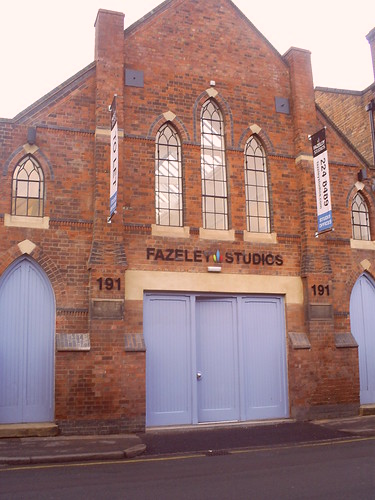
4th Social Media Surgery for Birmingham charities, community groups and Volantary Orgs

The new venue for the social media surgeries.

Sorry it is such short notice. The next social media surgery for voluntary groups is this Wednesday March 25th 2009, as a drop in from 5.30 to 7pm.  We have a plush new venue, which is a few minutes walk from BVSC. For all the details and how to sign up please visit the link below:

https://www.paradisecircus.com/social-media-surgeries/

The surgeries are run by a group of volunteers, mostly from the Birmingham bloggers groups. They are willing to show people from the cities charities and voluntary organisation how they can make best use of social media.   If you want to see what people have made of the first three surgeries you might like to watch this video on youtube:

https://www.youtube.com/watch?v=bEPbtfdIkVY

Ending Government "lockdown" on the internet.

Really good clear suggestions from the World Wide Web Consortium on, amongst other stuff, how some basics need to be put in place to allow the web to really play a part in modernising the way we govern ourselves. You can find the whole report “Improving Access to Government through better us of the Web” at this link.  Here’s an extract:

How Can Participation and Engagement Be Achieved?

Access of Public Servants to Web Sites that Citizens Are Using

Public servants need to be given access to the Web sites that citizens are using in order for them to be able to engage. The “lock-down” culture that exists in many government IT departments often restricts access to the more interactive Web sites for security reasons. This badly hampers the effective engagement with online communities by public servants.

Clear and Simple Rules for Public Servants

Governments need to set clear and simple rules for public servants to follow so they can be confident about engaging online without risking their career.

Training, Support and Cultural Change

There needs to be training and support for public servants in the use of appropriate tools and techniques to use the web to engage, particularly for the development of public policy. Engaging with online communities over the development of public policy will involve significant culture change in government. To achieve it will require clear leadership at senior levels. As the use of the web for engagement is so new in government there are few people with both the practical knowledge and the seniority and experience to provide this leadership.

Allow Comments on Policy Documents

Policy documents need to be presented in formats which allows for comment and discussion in a granular way. Fragments within such documents need to be directly addressable. In consultation documents for example, the relationship between the questions for discussion and the proposals to which those questions refer need to be made explicit. The RDFa [RDFA-PRIMER] based ArgotConsultation [ARGOTC] which was developed for the UK government is an example of the type of technology required for publishing consultation documents in ways that enable engagement.